TABLE OF CONTENTS
1. What is the Reports Section?
The Reports section gives you a clear picture of how your business is doing financially. It shows all the money coming in, all the money going out, and what is left at the end.
There are two main reports in Hana Accounting:
Profit and Loss Report: Shows whether your business is making money or losing money.
Balance Sheet: Shows what your business owns and what it owes at any given point in time.
Both reports are automatically updated based on your invoices, payments, and banking entries. You do not need to prepare them manually.
2. Profit and Loss Report
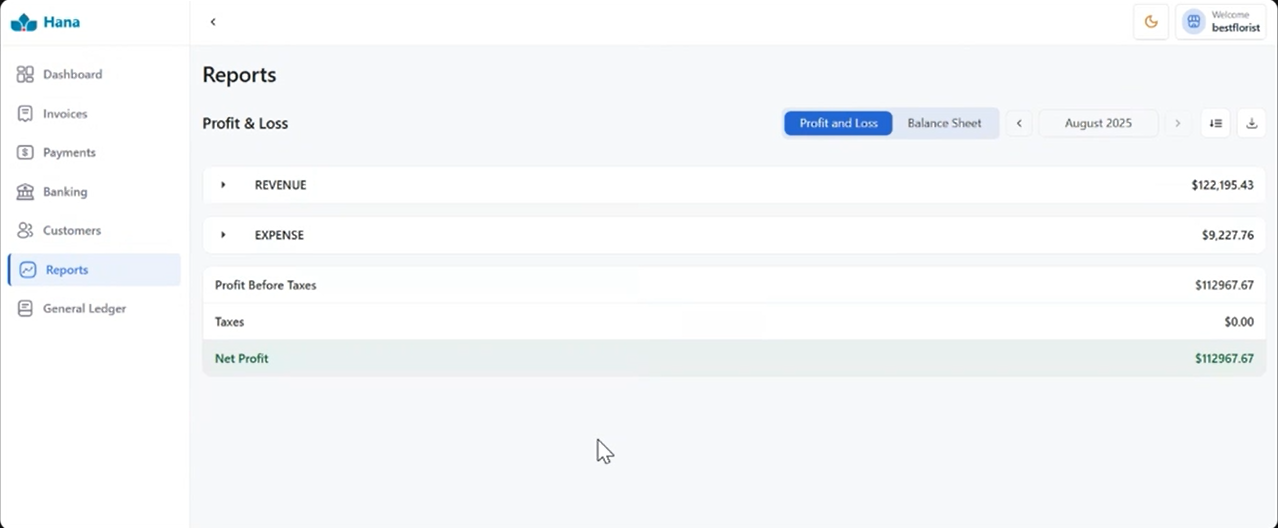
The Profit and Loss report, also known as the P&L, is your business's financial summary for a given period. It answers one simple question: Did you earn more than you spent?
Here is how it breaks down:
Revenue (Money Coming In):
This is the total amount your shop earned from sales. This includes flower sales, bouquets, delivery fees, and any other income.
Example: Total Revenue of $12,000
Expenses (Money Going Out):
This is the total amount spent to run your business. This includes buying flowers, paying rent, delivery costs, and other operating expenses.
Example: Total Expenses of $ 9,000
Profit Before Taxes:
This is calculated as Revenue minus Expenses. It shows how much you made before any taxes are applied.
Example: $12,000 minus $9,000 equals a Profit Before Taxes of $3,000
Taxes:
If any tax amounts apply, they will be shown here and deducted from the Profit Before Taxes.
Net Profit:
This is the final amount left after taxes are deducted. It is the actual profit your business made for that period.
In short, the Profit and Loss report tells you how much you earned, how much you spent, and what is left as your profit.
3. Balance Sheet
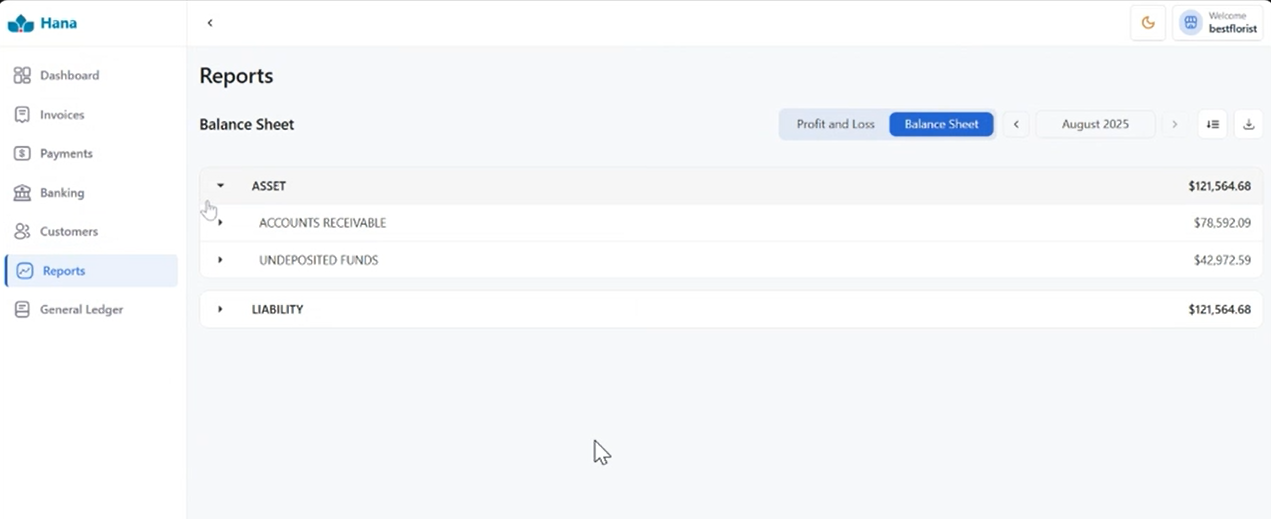
The Balance Sheet gives you a snapshot of your business's financial position at a specific point in time. It shows two things:
What your business owns: Assets.
What your business owes: Liabilities.
The key rule of a Balance Sheet is that both sides always balance out and are equal to each other.
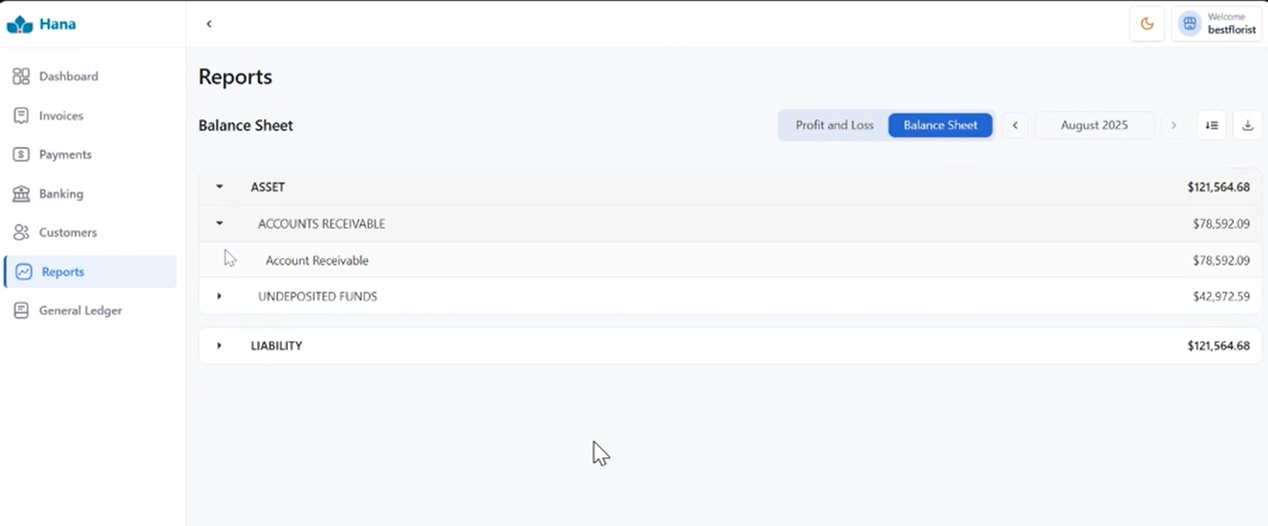
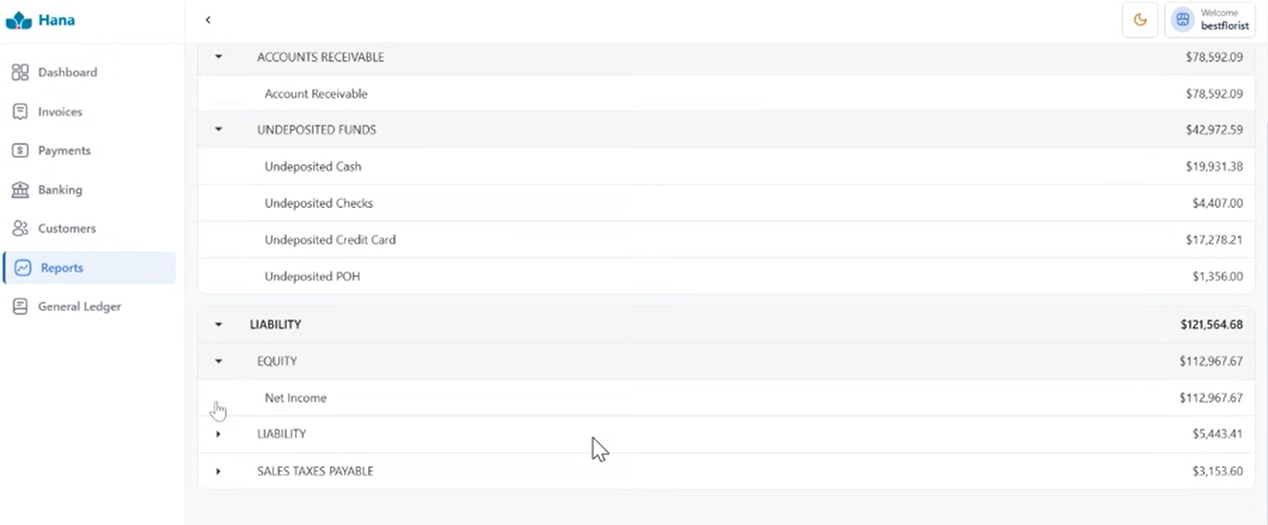
A. Assets - What Your Business Owns:
Assets are everything of value that your business currently holds.
Accounts Receivable:
- This is money that customers still owe you for orders they have received but not yet paid for. It is income that is due to come in.
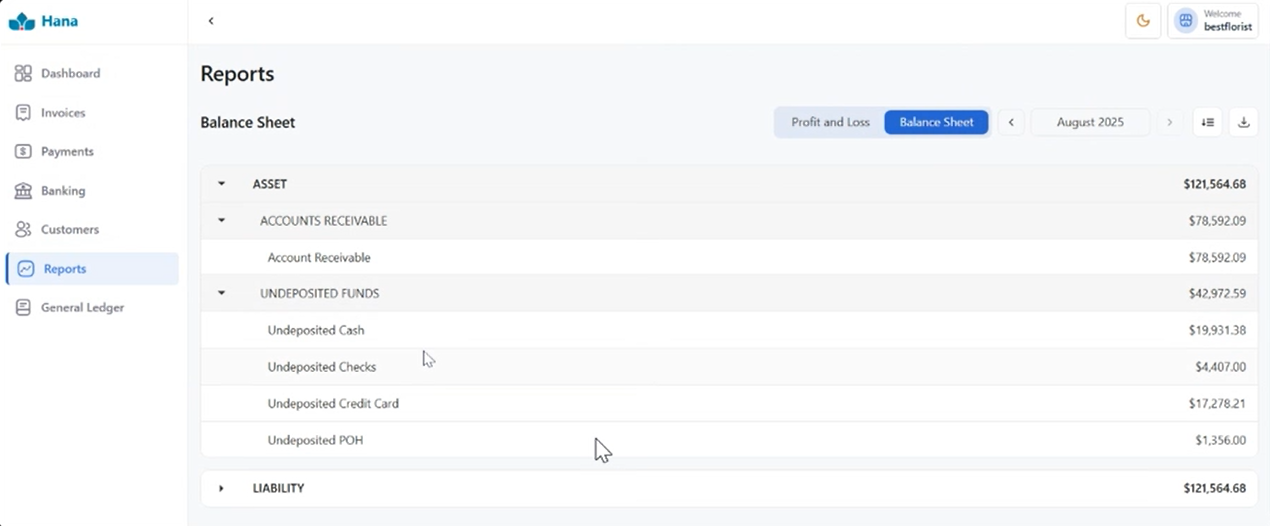
Undeposited Funds:
- These are payments you have already received from customers but have not yet deposited into your bank account.
In Hana Accounting, this is broken down by payment method:
Undeposited Cash
Undeposited Checks
Undeposited Credit Card
Undeposited POH
All of these together make up your Total Assets.
B. Liabilities - What Your Business Owes:
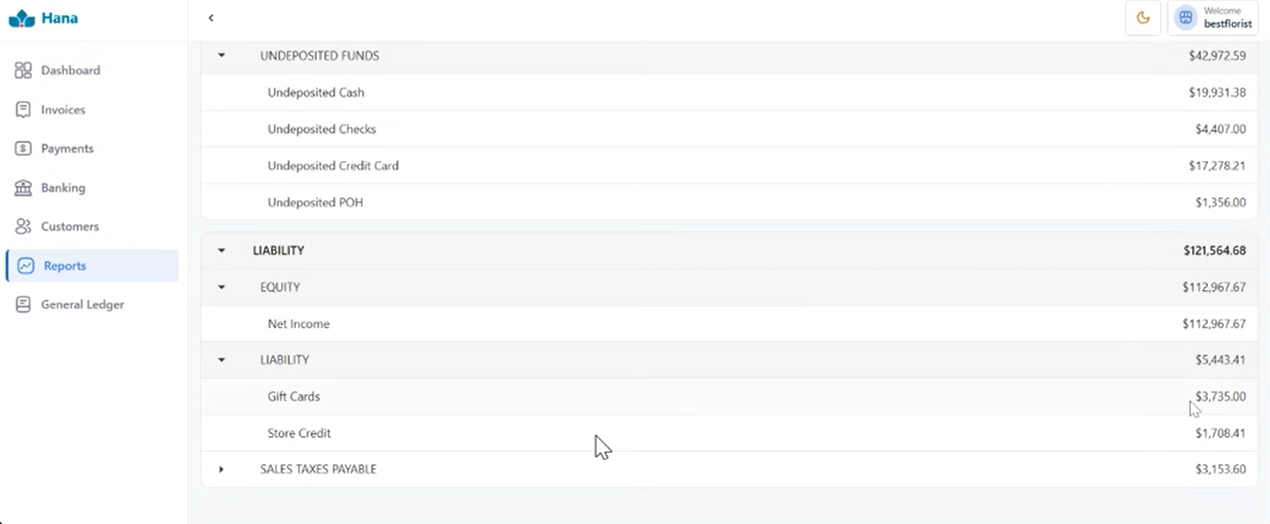
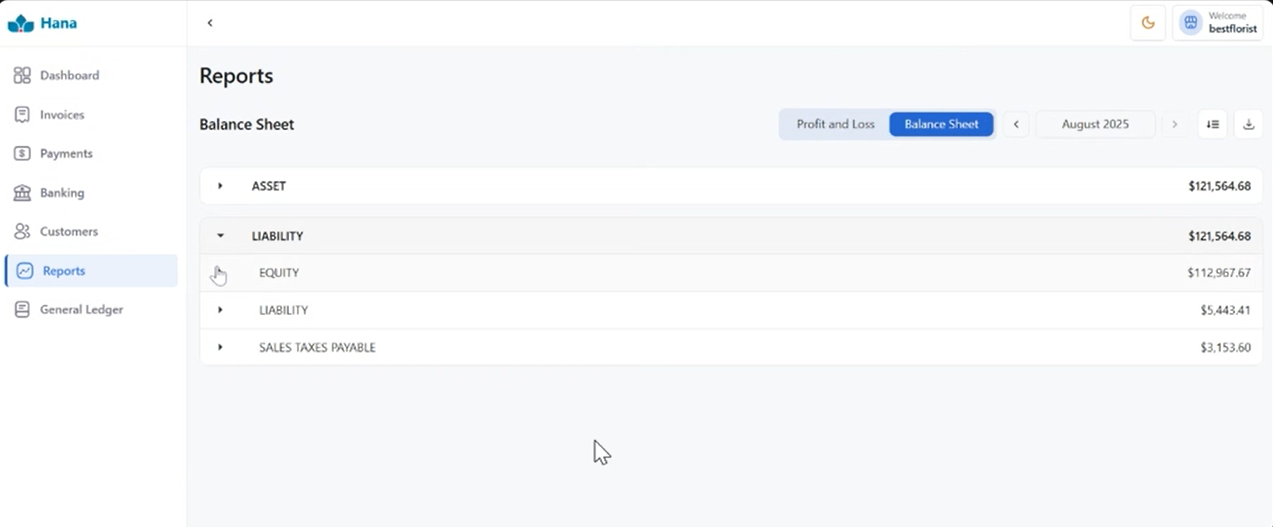
Liabilities are amounts your business still needs to pay to others. In Hana Accounting, liabilities are divided into three parts:
Equity:
Equity represents the florist's own share of value in the business. It comes directly from the Net Profit shown in the Profit and Loss report. Think of it as the profit that belongs to you as the owner, reinvested or retained in the business.
Liabilities:
These are amounts the business still needs to pay out. This includes things like loans from banks, unpaid supplier bills, outstanding Gift Card balances, and Store Credit amounts.
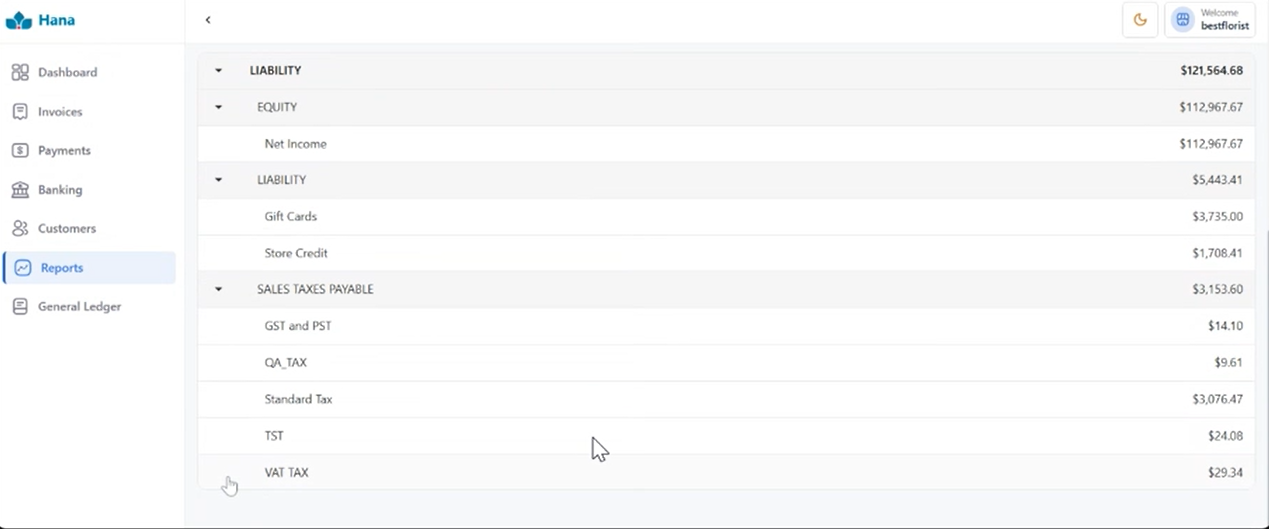
Sales Taxes Payable:
This is tax money that you have collected from customers on behalf of the government but have not yet paid over. It is not your income; it is money held temporarily until it is submitted to the tax authority.
A simple example:
A customer buys flowers worth $100. With a 10% tax applied, they pay $110 in total. Out of this, $100 is your income and $10 is tax collected on behalf of the government. That $10 sits under Sales Taxes Payable until you pay it to the government.
4. Key Takeaways
Profit and Loss Report: Tells you whether you are making a profit or a loss for a given period. It covers your revenue, expenses, and net profit.
Balance Sheet: Shows what your business owns (assets) and what it owes (liabilities) at a specific point in time.
Automatic Updates: Both reports are updated automatically based on your invoices, payments, and banking entries. No manual preparation needed.
Better Decisions: These reports give you the financial clarity to make smarter decisions for your shop, whether it is managing costs, planning purchases, or preparing for tax season.
Was this article helpful?
That’s Great!
Thank you for your feedback
Sorry! We couldn't be helpful
Thank you for your feedback
Feedback sent
We appreciate your effort and will try to fix the article